


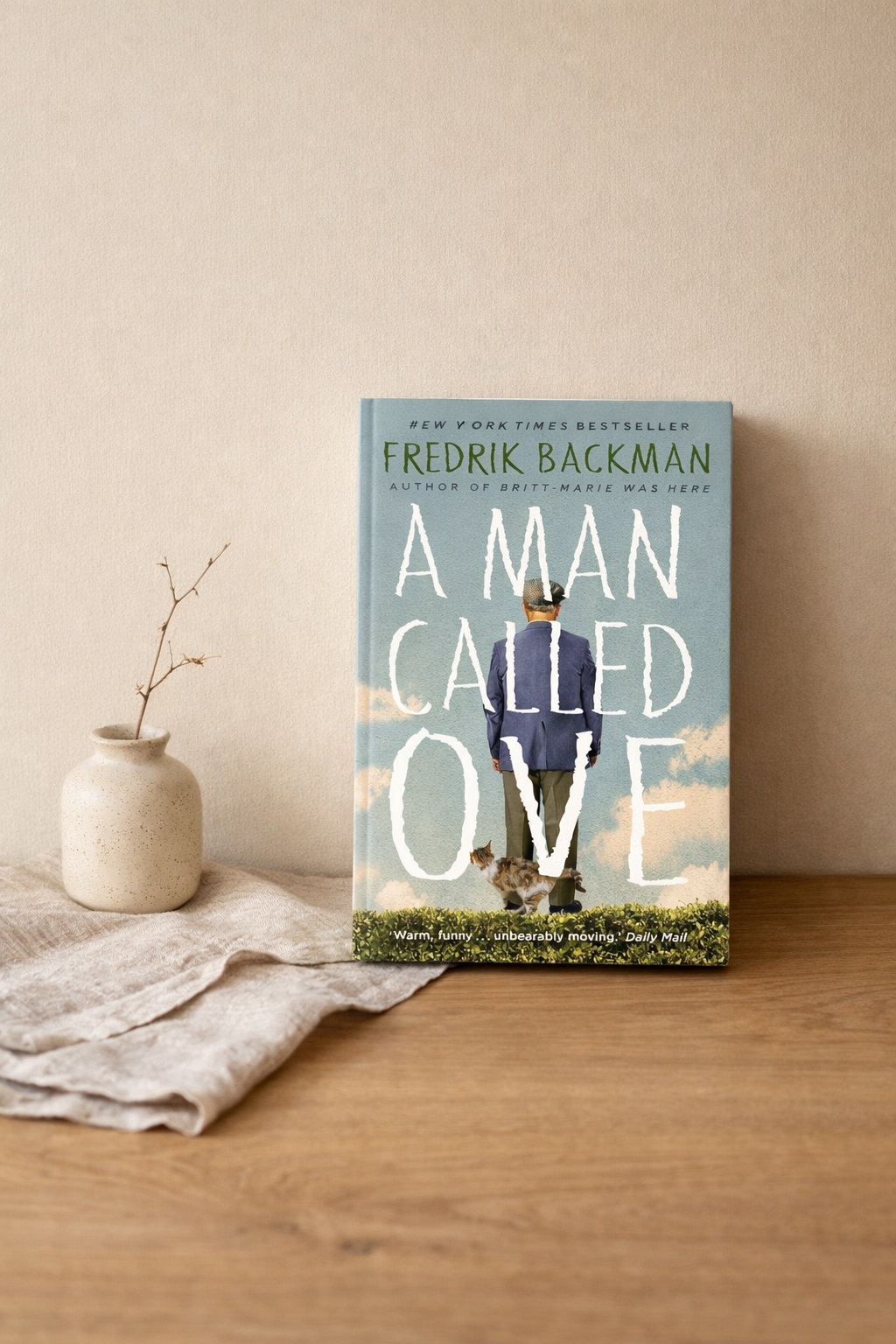
A Man Called Ove by Fredrik Backman is a contemporary fiction novel that has achieved substantial international recognition since its original publication in Sweden in 2012 and subsequent English translation in 2013. Positioned within the genres of literary fiction and contemporary humor, the novel combines character driven storytelling with themes of grief, community, aging, and redemption. This review evaluates the novel’s narrative construction, thematic depth, characterization, and its broader significance within modern fiction.
Overview and Plot Structure
At its core, A Man Called Ove tells the story of Ove, a recently widowed Swedish man in his late fifties who appears rigid, solitary, and perpetually irritated by the modern world. He adheres strictly to rules, routines, and principles that others in his suburban neighborhood find outdated or excessive. Beneath this outward severity, however, lies a history shaped by personal loss and enduring love.
The narrative alternates between present day events and flashbacks that chronicle Ove’s childhood, his relationship with his wife Sonja, and the experiences that shaped his worldview. This dual timeline structure allows readers to understand the emotional foundation beneath Ove’s stern demeanor. The present day storyline revolves around new neighbors, particularly a lively young family who inadvertently disrupt Ove’s routines. Through a series of interactions, misunderstandings, and small acts of dependence, Ove gradually reconnects with the community around him.
The plot progression is episodic but cohesive. Each chapter introduces a seemingly minor incident that accumulates emotional significance. While the premise initially centers on isolation, the novel steadily shifts toward connection and communal responsibility. The structure supports gradual character revelation rather than dramatic plot twists, making it consistent with contemporary character driven fiction.
Characterization and Emotional Development
Ove is one of the most carefully constructed protagonists in recent literary fiction. At first glance, he embodies the archetype of the curmudgeon. He criticizes technology, disapproves of casual rule breaking, and enforces neighborhood regulations with uncompromising precision. However, Backman systematically dismantles this superficial impression.
Through flashbacks, readers learn about Ove’s difficult childhood, his deep love for Sonja, and the losses that profoundly altered his life. His rigidity emerges not as cruelty but as a coping mechanism shaped by grief and a need for order in a chaotic world. The contrast between Ove’s internal vulnerability and external severity generates emotional complexity.
Supporting characters are equally significant. Parvaneh, the energetic and practical neighbor who moves in next door, becomes a catalyst for Ove’s transformation. Her persistence challenges his isolation without diminishing his dignity. Other residents in the neighborhood, including longtime acquaintances and even a stray cat, contribute to a network of relationships that gradually erode Ove’s self imposed solitude.
Backman avoids caricature by granting each character distinct motivations and personalities. This ensemble approach reinforces the novel’s broader exploration of community and interdependence.
Themes and Social Commentary
Several themes define A Man Called Ove and contribute to its sustained popularity in book clubs and contemporary fiction discussions.
Grief and Resilience: The novel portrays grief as enduring rather than temporary. Ove’s mourning for Sonja is neither romanticized nor dismissed. Instead, it is presented as a persistent presence that shapes daily life. The narrative acknowledges that healing does not require forgetting.
Community and Belonging: The suburban setting functions as more than backdrop. It becomes a space where small acts of reliance foster unexpected bonds. The story suggests that community often develops through inconvenience rather than deliberate planning.
Aging and Relevance: Ove’s frustrations with modern technology and changing social norms reflect broader anxieties about aging and obsolescence. Backman addresses these concerns with empathy, portraying older individuals as capable of growth while respecting their accumulated experience.
Love and Loyalty: Through flashbacks to Ove’s marriage, the novel emphasizes enduring partnership. Sonja’s influence persists beyond her physical presence, shaping Ove’s moral framework and decisions.
These themes align the novel with contemporary literary fiction that balances emotional introspection with social realism.
Writing Style and Narrative Voice
Fredrik Backman’s writing style is direct and restrained. The prose relies on understated humor, situational irony, and carefully timed emotional revelations. Rather than employing elaborate language, Backman uses clarity and repetition to reinforce character traits and thematic elements.
The narrative voice maintains a degree of distance while remaining compassionate. Ove’s internal logic is presented without ridicule, allowing readers to recognize both the limitations and virtues of his worldview. This balance contributes to the novel’s broad appeal across age groups.
The translated edition preserves the novel’s Scandinavian sensibility while remaining accessible to English speaking audiences. The tone is neither sentimental nor excessively dramatic. Emotional impact arises from cumulative detail rather than overt intensity.
Genre Positioning and Cultural Impact
A Man Called Ove occupies a distinct position within contemporary fiction and literary fiction. It combines elements of humor, drama, and social commentary without conforming strictly to one category. The novel’s success contributed to a wave of character centered international fiction gaining traction in the United States market.
The book’s popularity also led to film adaptations, including the Swedish film released in 2015 and the American adaptation A Man Called Otto starring Tom Hanks. These adaptations expanded the story’s reach and introduced Ove’s character to broader audiences. However, the novel remains distinctive for its layered internal perspective and gradual pacing.
For readers searching for contemporary fiction about grief, bestselling literary novels, or character driven novels about aging, A Man Called Ove frequently appears in recommendation lists. It is often categorized alongside modern novels that emphasize emotional realism and understated humor.
Critical Evaluation
The strengths of A Man Called Ove lie in its nuanced characterization and thematic coherence. Backman demonstrates careful control over narrative structure, revealing key emotional information incrementally. The balance between humor and seriousness prevents the story from becoming overly sentimental.
Some critics have noted that certain supporting characters verge on idealization, particularly in their unwavering patience with Ove. Additionally, the episodic structure may feel predictable to readers who prefer plot driven fiction. However, these elements align with the novel’s intention to foreground emotional transformation over suspense.
The pacing remains consistent throughout, with each chapter contributing to the central arc of reconnection. The ending provides resolution without undermining the authenticity of Ove’s personality. He changes, but he does not become unrecognizable.
Conclusion
A Man Called Ove by Fredrik Backman is a carefully crafted work of contemporary literary fiction that examines grief, community, aging, and resilience through the lens of a singular protagonist. Its combination of humor and emotional depth has secured its place among bestselling international novels in the United States and beyond.
For readers interested in character driven fiction, modern European literature, or novels about unexpected friendship, this book offers a measured and thoughtful experience. Backman’s restrained prose and commitment to emotional authenticity contribute to a narrative that resonates without resorting to exaggeration.
In evaluating its contribution to contemporary fiction, A Man Called Ove stands as a meaningful exploration of how ordinary lives intersect and how connection can emerge in unlikely circumstances. Its enduring relevance reflects both its thematic universality and its disciplined narrative execution.