


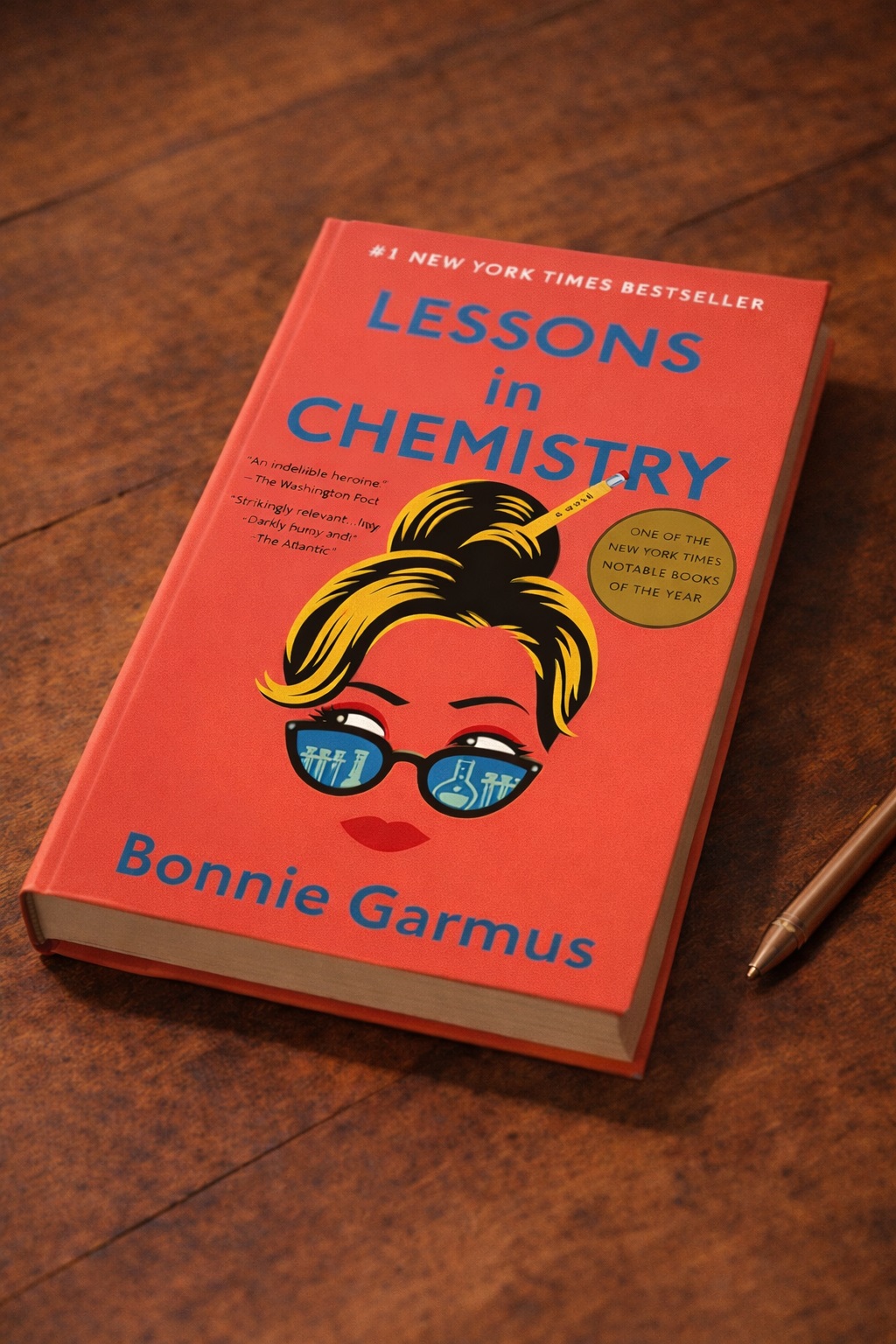
Lessons in Chemistry is an engaging and generous debut that succeeds more through the force of its convictions than through the subtlety of its storytelling.
Published in 2022, Bonnie Garmus's debut novel blends historical fiction with comic drama, following chemist Elizabeth Zott as she navigates the entrenched sexism of early-1960s America before unexpectedly becoming the host of a television cooking show. The novel became an international bestseller, earned numerous literary awards, and inspired a successful television adaptation, finding a large readership well beyond its initial publication.
What I think Garmus was trying to accomplish was not simply to tell the story of one remarkable woman but to explore how intelligence, integrity, and scientific thinking can become quiet forms of resistance in a society determined to underestimate them. That ambition is admirable, and for much of the novel it is carried by an unmistakable warmth toward its characters. Elizabeth's refusal to compromise her principles is not presented as perfection but as consistency, and the novel's faith in curiosity and education gives it a sincere optimism that I found appealing.
Its greatest strength is the accessibility with which it communicates serious ideas. Garmus has an enviable ability to weave discussions of science, gender, and ambition into a narrative that remains inviting rather than intimidating. Even when addressing systemic injustice, the novel retains a sense of hope that encourages readers to imagine change as both possible and worthwhile.
Its principal weakness, however, is that its moral architecture can feel overly deliberate. Many conflicts are drawn in broad strokes, and several supporting characters seem designed primarily to embody particular social attitudes rather than to exist as fully independent individuals. As a result, moments that might have carried greater emotional complexity sometimes arrive with conclusions that feel predetermined.
On my scale, three and a half stars indicate a book I am pleased to recommend while recognizing meaningful reservations. I admired Lessons in Chemistry more often than I was surprised by it. Its emotional generosity, memorable central character, and confident pacing make it consistently rewarding, yet I finished it wishing for greater nuance in both its characterization and its treatment of the ideas it raises. It is a novel that reaches a wide audience for understandable reasons, even if it did not entirely persuade me of its own exceptional status.
I would recommend Lessons in Chemistry most readily to readers who enjoy character-driven historical fiction with an optimistic spirit, particularly those who appreciate novels that combine social commentary with an accessible, emotionally engaging narrative.