


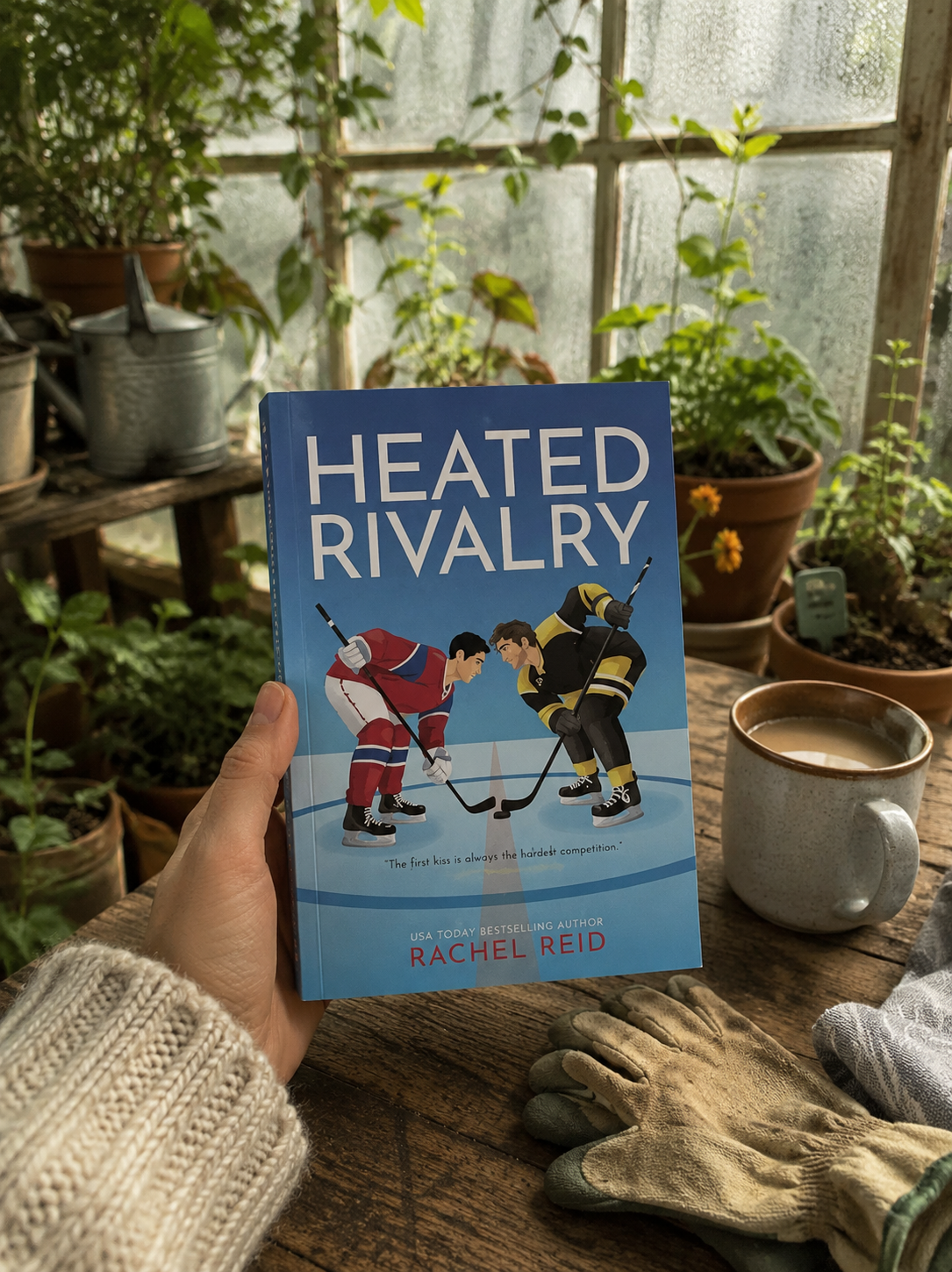
Heated Rivalry succeeds because it understands that lasting romance is built not merely on attraction, but on the slow accumulation of trust, vulnerability, and difficult choices.
Rachel Reid's 2019 novel is a contemporary gay sports romance and the second installment in her Game Changers series. It follows two elite professional hockey players whose fierce public rivalry conceals a long-running secret relationship, unfolding over the course of a decade against the pressures of a sport where coming out still carries significant personal and professional risks. Reid has spoken about writing the series in response to the culture of professional hockey, and the novel has become one of the defining books of the modern queer romance genre.
What I admired most was the patience of its construction. Rather than depending on repeated misunderstandings or artificial obstacles, Reid allows the central relationship to evolve gradually through changing circumstances and emotional maturity. The novel never forgets that love stories are sustained by character, and I found myself increasingly invested not because the plot became more elaborate, but because the people at its center became more fully realized.
Its greatest strength is the emotional credibility of its romance. Shane and Ilya are distinct individuals with conflicting priorities, and Reid gives both of them room to grow without asking either to surrender the qualities that first made them compelling. The tenderness that develops between them feels earned precisely because it emerges alongside fear, frustration, and compromise rather than replacing them.
The weakness, for me, lies in the prose itself. Reid writes with clarity and momentum, but the language rarely aims for elegance or subtlety. There are passages where exposition is more functional than graceful, and readers who prize stylistic richness may occasionally wish the novel trusted implication more than direct explanation. That limitation, however, never seriously undermined the emotional force of the story.
On my scale, four and a half stars are reserved for books that accomplish what they set out to do with unusual confidence, even if they fall short of being truly exceptional across every dimension. Heated Rivalry belongs there. It combines a convincing central relationship with thoughtful engagement in the realities of queer life within professional sport, and it does so with generosity toward its characters rather than sentimentality. I finished it persuaded that its emotional honesty matters more than its occasional stylistic plainness.
I would recommend Heated Rivalry most readily to readers who value character-driven romance, particularly those looking for a love story that balances genuine intimacy with the pressures of ambition, identity, and public expectation.