


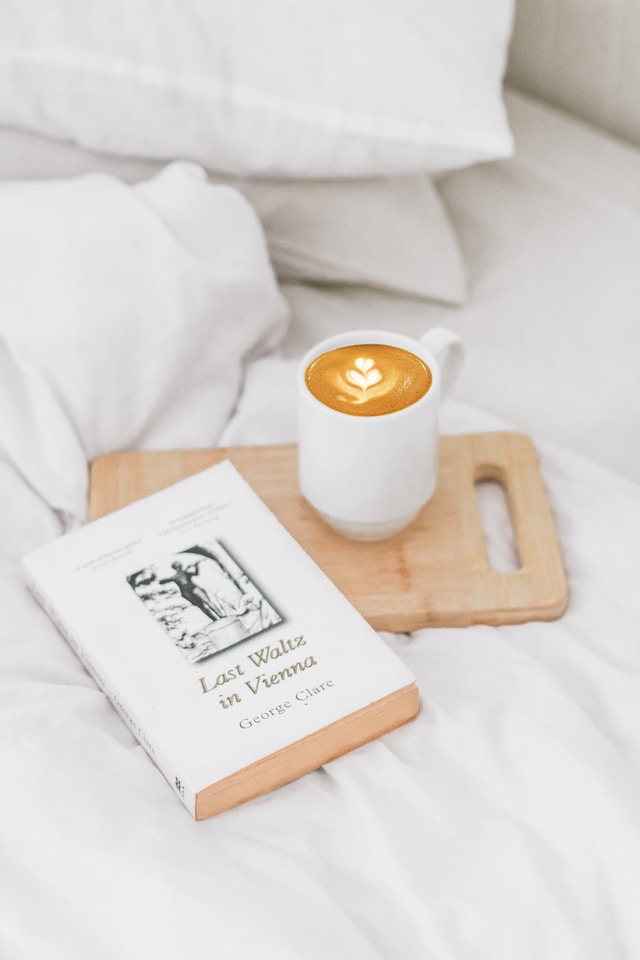
A book this sad has no business being quite so readable.
George Clare’s *Last Waltz in Vienna* is a family memoir, historical chronicle and Holocaust testimony, tracing the Klaar family from its nineteenth-century establishment in Vienna to its destruction under Nazism. Clare, born Georg Klaar in 1920, writes from the peculiar vantage point of the survivor: intimate enough to remember the texture of domestic life, distant enough to reconstruct generations before him.
The prose is where the book earns its distinction. *The New Yorker* described it as “limpid and affecting”, which is unusually precise praise: Clare’s sentences tend towards clarity rather than ornament, and his emotional force generally comes from accumulation rather than rhetorical fireworks. A review in the *Historical Novels Review* calls his manner affectionate, evocative and sadly humorous, and that combination is exactly right. Clare can linger over Vienna’s social rituals, family absurdities and vanished comforts without turning the past into confectionery.
But the control is not absolute. *Kirkus Reviews* found the book uneven, describing it as a mixture of family portraiture, reminiscence and political history that can become disjointed. That unevenness is most apparent when Clare moves from lived memory into historical exposition. The prose loses some of its tensile quality; chronology begins doing the work that narrative structure ought to do. There are also moments when his judgments of political figures feel less carefully calibrated than his portraits of relatives.
Still, when Clare writes about people rather than historical abstractions, the book becomes remarkably alive. His register is conversational but never slack, and his humour—often dry, sometimes almost mischievous—makes the subsequent catastrophe more terrible precisely because the vanished world has first been allowed to seem ordinary. **This is the one occasion on which I will surrender my customary suspicion of “moving”: the book genuinely earns it.**
The title promises a grand tragedy; Clare wisely gives us something smaller and therefore more devastating: rooms, marriages, habits, quarrels, loyalties, streets. The Holocaust is not treated as an abstract historical horror but as the force that enters those ordinary particulars and annihilates them.
A humane, lucid and occasionally untidy memoir whose greatest achievement is stylistic restraint: Clare does not need to decorate the catastrophe. He only needs to remember what existed before it.