


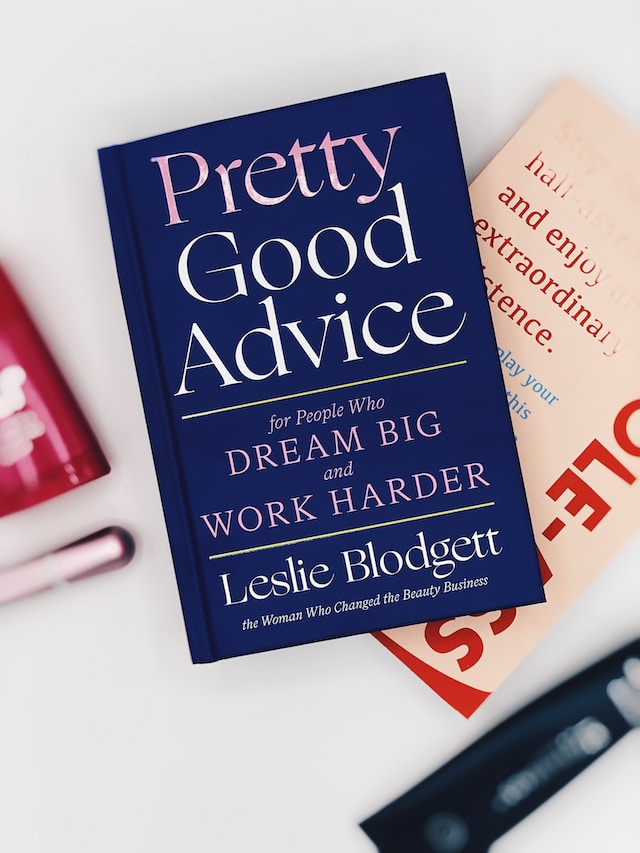
Pretty Good Advice succeeds because it never pretends to possess all the answers; instead, it offers a lifetime of practical observations delivered with honesty, humor, and uncommon generosity.
Published in 2020, Leslie Blodgett's book occupies an interesting space between memoir, business writing, and motivational self-help. Best known for transforming BareMinerals into a global beauty brand, Blodgett organizes the book into ninety-seven short reflections drawn from her experiences in leadership, entrepreneurship, relationships, and everyday life. Rather than presenting a single overarching argument, she invites readers into a series of personal lessons shaped by both successes and failures.
What I appreciated most was Blodgett's refusal to cultivate the image of the infallible executive. She is clearly writing to encourage ambition, but she does so without suggesting that confidence alone guarantees achievement. The book's conversational style reflects its central belief that wisdom is accumulated gradually through experience, curiosity, and the willingness to remain approachable. That modesty gives the advice greater credibility than many books in the genre that rely on grand claims or rigid formulas.
Its greatest strength is its voice. Blodgett writes with warmth and directness, and the brevity of each chapter allows individual ideas to stand on their own without becoming repetitive. Even when a particular lesson is familiar, it often gains freshness through the personal anecdote or unexpected perspective that accompanies it. I found the format especially well suited to readers who prefer reflection in small, digestible portions rather than extended theoretical discussion.
The book's weakness is that its structure inevitably limits depth. Because each piece is intentionally brief, many ideas are introduced just as they become most interesting. Readers looking for a sustained exploration of leadership, entrepreneurship, or personal development may occasionally wish Blodgett had lingered longer on her most compelling experiences instead of moving quickly to the next insight.
On my scale, four stars are reserved for books I would recommend with confidence while acknowledging that they do not attempt comprehensive treatment of their subject. Pretty Good Advice earns that rating because it consistently achieves what it sets out to do. It is thoughtful, encouraging, and grounded in lived experience, even if its wisdom is often evolutionary rather than revelatory.
I would recommend Pretty Good Advice most readily to readers at the beginning of their careers, aspiring entrepreneurs, or anyone who enjoys practical life lessons delivered with humility, optimism, and a strong sense of personal authenticity.