


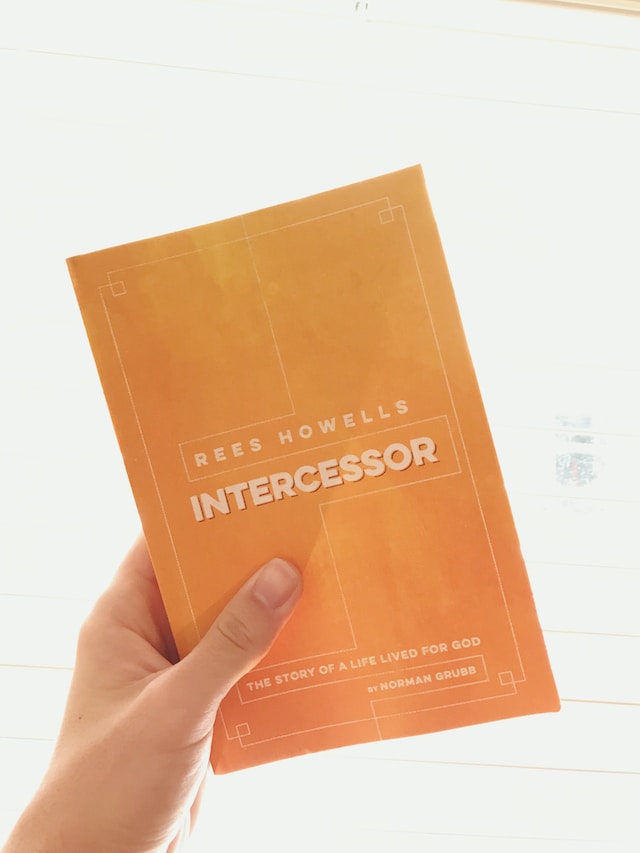
Rees Howells, Intercessor by Norman Grubb is a Christian biography, but calling it merely a biography feels rather like calling a revival meeting a pleasant Sunday gathering. Published in 1952, the book follows the life of Welsh missionary and Bible College of Wales founder Rees Howells, tracing his journey from a mining community in Wales through missionary work in Africa, revival, radical prayer and the founding of the college in Swansea. Its central concern is intercession: the idea that prayer can become not simply personal devotion but an active spiritual vocation.
Grubb writes with the certainty of a man who is not particularly interested in leaving the reader comfortably undecided. Howells's life is presented as a sustained education in obedience, sacrifice and faith, with events interpreted through a strongly evangelical and Pentecostal understanding of the Holy Spirit. The result is closer to spiritual testimony than detached historical biography. (If you came looking for footnotes and competing interpretations, you have wandered into the wrong chapel.)
That is both the book's strength and its limitation.
As a piece of religious writing, it has a remarkably clear organizing idea. Howells's experiences are not presented as disconnected anecdotes but as stages in an increasingly demanding understanding of prayer. The structure gives the book momentum, particularly once Howells's missionary work and later intercession become the focus. Grubb also writes with enough warmth and simplicity to prevent the theology from becoming entirely abstract. There is a person here, not merely a collection of lessons.
But the book asks the reader to accept its spiritual interpretation of events on its own terms. Reports of healing, divine guidance and prayers apparently affecting major events are presented with confidence rather than examined critically. The famous wartime sections, including intercession surrounding Dunkirk and the Battle of Britain, are especially striking because they place Howells's private prayer life alongside events of enormous historical consequence. For a believer receptive to that worldview, this can be deeply stirring. For a skeptical reader, it is much harder to separate documented history from theological interpretation.
Compared with the classic tradition of Christian devotional biography, Grubb is firmly on the inspirational side rather than the analytical one. He wants Howells's life to challenge the reader, not merely inform them. That purpose gives the book its unusual intensity.
There is also something refreshing about its seriousness. Grubb does not reduce faith to vague encouragement or inspirational wallpaper. He presents discipleship as costly, demanding and occasionally uncomfortable.
Whether you accept its supernatural claims or not, Rees Howells, Intercessor is an unusually committed portrait of a man who believed prayer was a form of action. It is earnest, occasionally overwhelming and absolutely sincere. For readers interested in Christian spirituality and the history of intercessory prayer, it remains a fascinating work, precisely because it never apologizes for believing that prayer can change the world.