


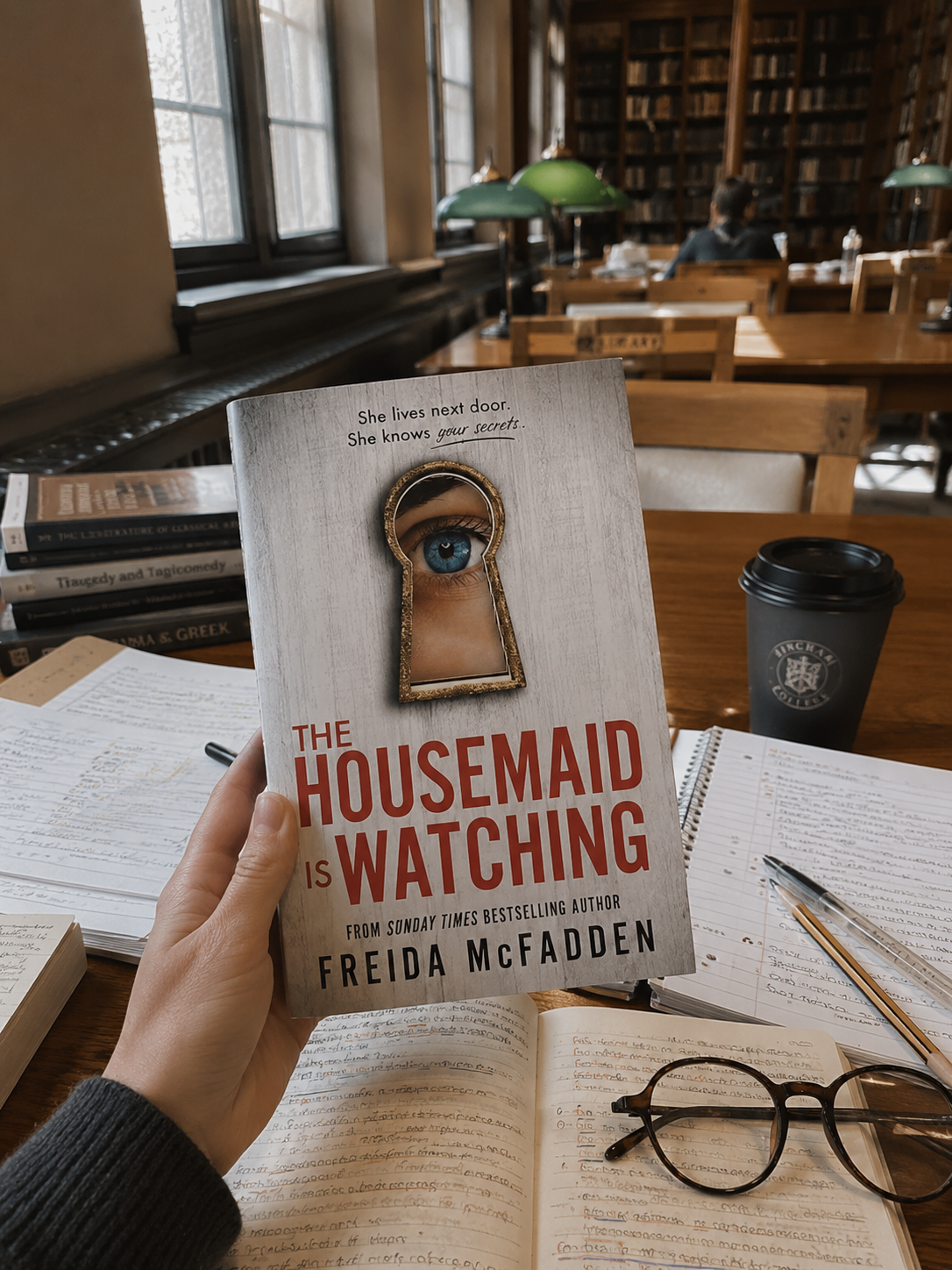
The Housemaid Is Watching is Freida McFadden's third Housemaid novel, and it moves the series into familiar domestic thriller territory: the quiet suburban street where everybody has excellent lawns, suspiciously tidy houses, and enough secrets to keep the local police employed for years. Millie and Enzo have finally built the stable family life Millie once could barely imagine, complete with children and a home of their own. Naturally, this means the universe has to ruin it.
The premise is straightforward and effective. Strange neighbours, a watchful figure, Enzo's mysterious nighttime activities and a neighbour's murder gradually turn Millie's dream home into another place where she cannot quite trust what she sees. The book belongs squarely to the psychological and domestic suspense tradition, particularly the modern version that turns marriage, parenting and suburban respectability into sources of danger.
McFadden's biggest strength is momentum. The chapters are short, the prose is deliberately uncomplicated, and revelations arrive with the regularity of someone ringing a doorbell because they know you are trying to sleep. It is extremely easy to keep reading. The problem is that momentum is not the same thing as mystery construction.
The book throws plenty of suspicion around, but some of its misdirection feels engineered rather than earned. Characters conceal information because the plot needs them to conceal information, and several clues are so conspicuously highlighted that an experienced thriller reader can practically hear the author whispering, "Remember this." The central mystery does eventually explain itself, but the chain of revelations asks for a generous suspension of disbelief.
That matters because domestic thrillers work best when the reader can look back and see the machinery. The great ones make you think, "Of course." Here, the response is more often, "All right, apparently we're doing that." (There is a difference.)
Still, the book understands the appeal of the genre. The house is not merely a setting but a symbol of the life Millie has fought to build, while the title's housemaid carries the series' recurring fascination with people who are present in wealthy or respectable homes without being truly seen. That idea gives the otherwise twist-hungry plot some thematic weight.
Compared with the classic domestic suspense tradition, this is less interested in elegant psychological ambiguity than in rapid-fire reversals. That is not necessarily a flaw. McFadden is making a thriller designed to be consumed quickly, not admired reverently from a safe distance.
The result is entertaining, messy and occasionally gloriously implausible. The mystery does not always play fair, but the book knows exactly how to keep you turning pages. For readers who want airtight plotting, look elsewhere. For readers who enjoy suburban secrets, family paranoia and increasingly outrageous twists, Millie's latest nightmare has plenty to offer.