


Free Book Review Submission Platform - Planet's Best Book Reviews
  • Share this:

The Seven Husbands of Evelyn Hugo

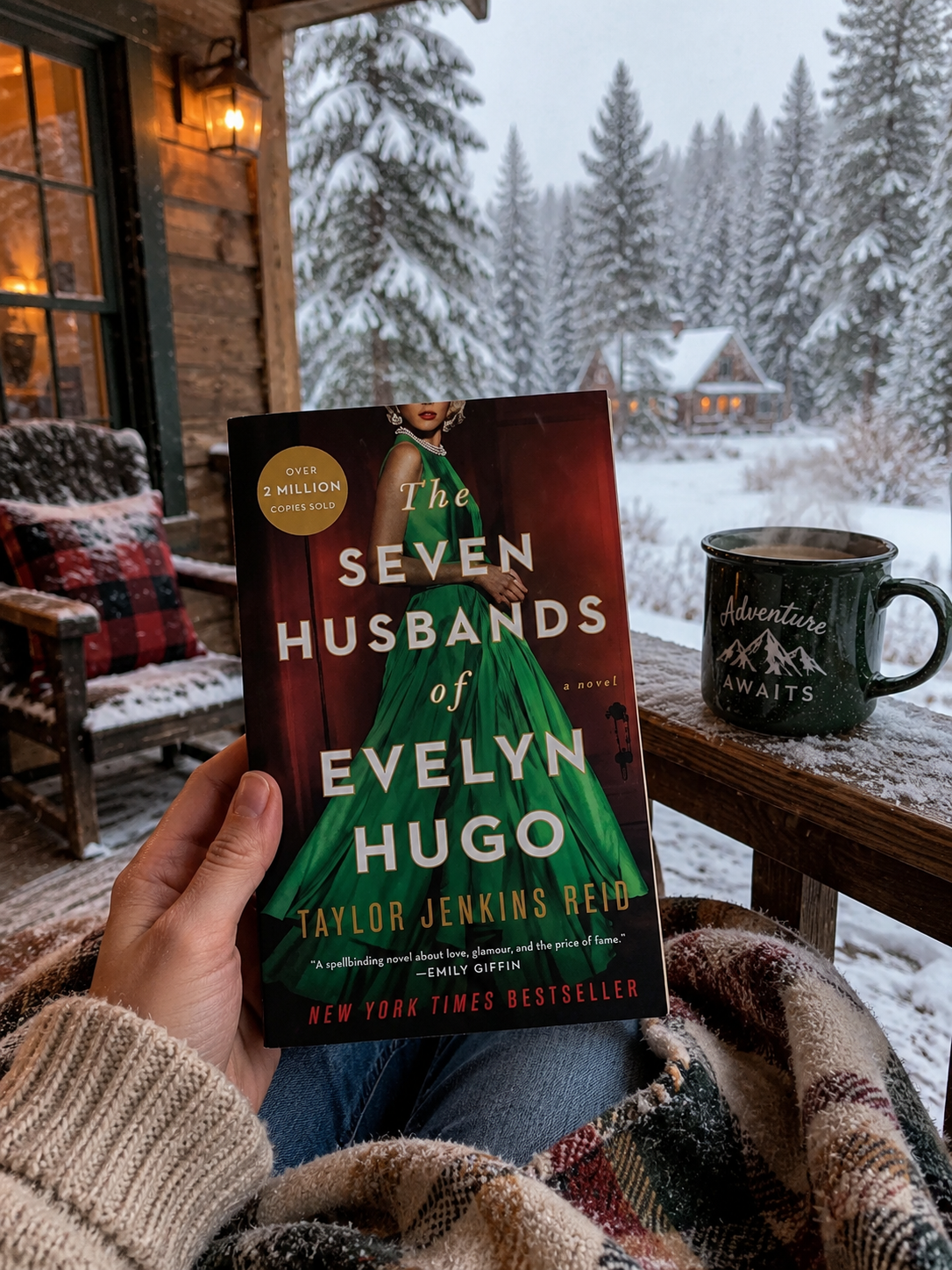
There are some books you race through because you need to know what happens. Then there are books you deliberately slow down, not because the plot loses momentum, but because you realize the experience is as rewarding as the destination. The Seven Husbands of Evelyn Hugo was that kind of novel for me. I found myself lingering after each chapter, less interested in uncovering the next revelation than in spending a little more time in Evelyn's world. Sitting beneath a blanket while snow quietly settled across the trees outside, it felt strangely fitting to read a story built around memory. The stillness beyond the porch only made Evelyn's voice feel more immediate.

At its heart, the novel is presented as the life story of one of Hollywood's most enigmatic actresses. Evelyn Hugo has spent decades controlling her image, carefully deciding what the public is allowed to see. Now, in the twilight of her life, she chooses to tell the full story behind her extraordinary career, her marriages, and the compromises that shaped both. What begins as a glamorous Hollywood memoir gradually becomes something much more intimate, asking difficult questions about ambition, identity, love, and the cost of constructing a public persona.

One of Taylor Jenkins Reid's greatest strengths is her ability to make fictional lives feel historically authentic. By the second or third chapter, I found myself forgetting that Evelyn Hugo had never existed. The references to old Hollywood studios, changing cultural expectations, celebrity journalism, and shifting public attitudes are woven so naturally into the narrative that the illusion becomes remarkably convincing. The novel never depends on historical exposition to establish its setting. Instead, the era reveals itself through the choices its characters are forced to make.

Evelyn herself is one of the most compelling protagonists I have encountered in contemporary fiction. She is ambitious, calculating, generous, selfish, deeply loving, and occasionally ruthless. Reid never asks readers to admire her unconditionally, nor does she attempt to excuse every decision Evelyn makes. That complexity is precisely what gives the novel its emotional force. Evelyn understands that every success in her life demanded a sacrifice somewhere else, and she recounts those compromises with remarkable honesty rather than self-pity.

The title naturally invites curiosity about the seven marriages, but I quickly realized that the husbands are not the true subject of the novel. They function almost like milestones, marking different chapters of Evelyn's evolution while revealing how often public narratives conceal private realities. The deeper story lies elsewhere, and Reid handles that shift with enough subtlety that it never feels like the novel is abandoning its original premise. Instead, it becomes clear that the title itself reflects the gap between the story the world chooses to remember and the one Evelyn has actually lived.

The structure works beautifully. Moving between Evelyn's recollections and Monique Grant's present-day perspective creates a quiet tension that extends beyond simple curiosity. Reid carefully withholds information, not to manipulate the reader, but to demonstrate how incomplete every biography inevitably is. Lives are rarely understood in chronological order. They are assembled gradually, shaped by memory, regret, and the stories people choose to tell.

What impressed me most, however, was the emotional restraint. Despite dealing with fame, scandal, and enormous personal loss, the novel rarely feels melodramatic. Reid trusts readers to recognize the emotional significance of a scene without overwhelming it through excessive sentiment. Some of the book's most affecting moments arrive almost casually, hidden within ordinary conversations or seemingly simple observations. Those scenes linger because they feel truthful rather than theatrical.

The supporting characters are equally memorable, particularly because each relationship reveals a different side of Evelyn that would otherwise remain hidden. Rather than existing merely to support her narrative, they challenge her, disappoint her, forgive her, and occasionally force her to confront uncomfortable truths about herself. The result is a cast that feels fully inhabited instead of arranged around a single remarkable personality.

If I were to offer one criticism, it would be that a few later revelations are foreshadowed strongly enough that they lose some of their surprise. Yet the novel was never truly dependent on shocking twists. Its emotional impact comes from understanding why characters made certain decisions, not simply discovering what those decisions were. Even when I anticipated where the story might be heading, that anticipation never reduced its effect.

Perhaps what stayed with me most was the novel's understanding that legacy is often built on selective memory. Public admiration and private fulfillment are not always aligned, and the stories history celebrates frequently overlook the quieter truths that matter most. Evelyn spends much of her life shaping how the world sees her, only to realize that being understood is ultimately more valuable than being admired.

Long after I closed the book, I found myself looking out at the snow-covered landscape rather than reaching for another novel. The silence felt appropriate. The Seven Husbands of Evelyn Hugo is not simply a story about fame or old Hollywood. It is a thoughtful meditation on reinvention, authenticity, and the emotional cost of living behind carefully constructed versions of ourselves. It leaves you thinking less about the glamour that surrounded Evelyn Hugo and far more about the woman who existed once the cameras stopped rolling.

0 0

Trending Posts

Planet's Best Book Reviews

Sign up now and join the community of best book reviewers.
Advertisement Inquiry - info@ehardback.com

Sign Up