


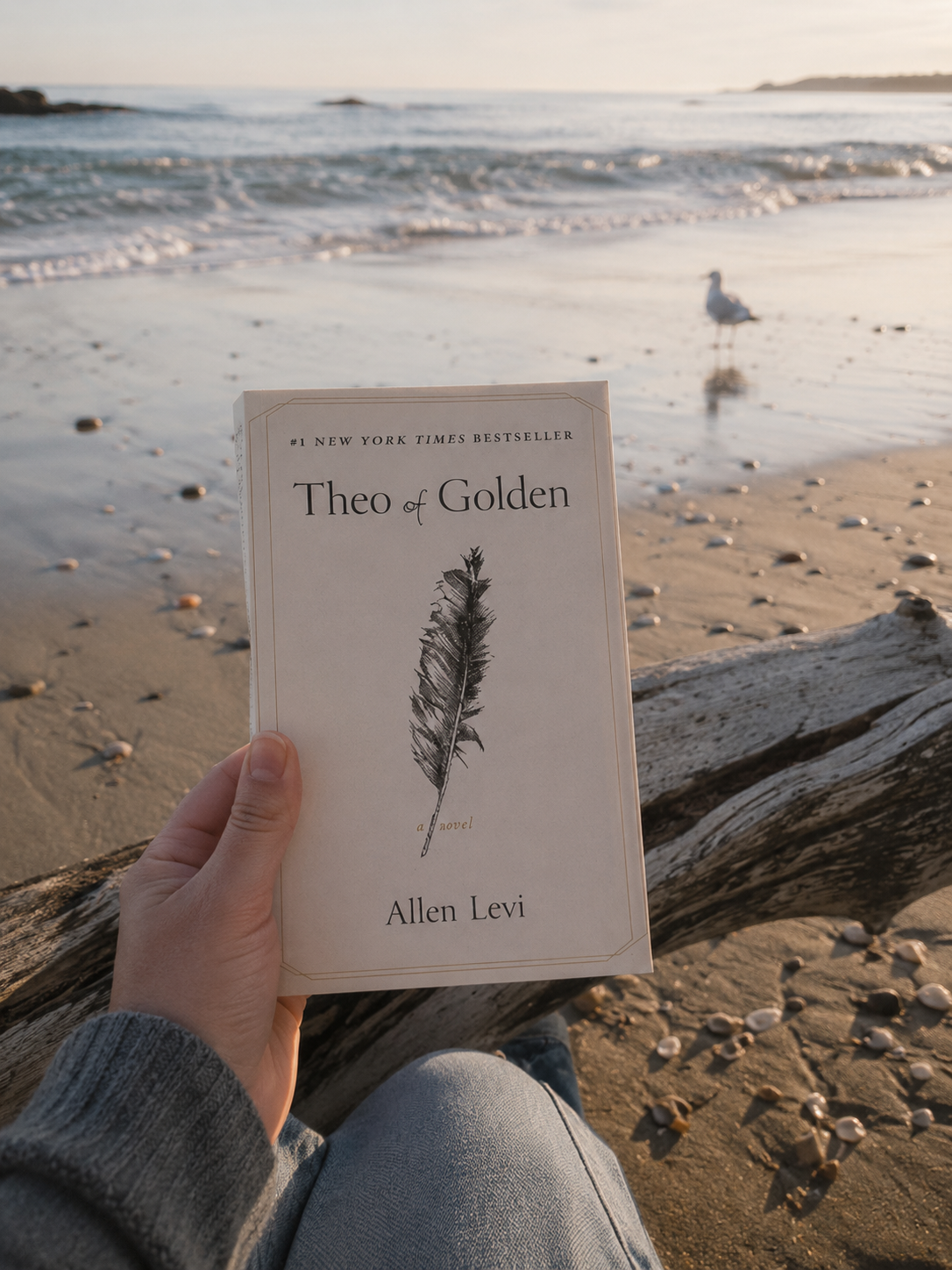
The tide was coming in slowly, almost quietly enough to ignore. A gull wandered along the shoreline without urgency, waves folded over themselves in gentle rhythm, and the last light of the afternoon softened everything it touched. I had settled onto a piece of driftwood with Theo of Golden in my hands, thinking I would read a chapter before heading home. Instead, I stayed until the sky began to lose its warmth. Some books ask you to hurry through them. This one seemed content to keep pace with the sea.
Allen Levi's novel introduces readers to Theo, a man whose life has become increasingly defined by solitude, routine, and the quiet weight of memory. The story unfolds with an unhurried confidence, more interested in conversations, relationships, and moments of reflection than dramatic plot turns. It is a novel that values ordinary lives, suggesting that even the smallest encounters can carry lasting significance when viewed with enough attention.
One of the things I appreciated most was Levi's willingness to embrace simplicity without allowing the story to become slight. There is very little urgency in the conventional sense. Instead, the novel finds its momentum through gradual emotional discovery. As Theo encounters people whose lives intersect with his own, the book gently explores how connection often arrives unexpectedly and how healing rarely announces itself with dramatic fanfare.
Theo is an easy character to spend time with, not because he is particularly charismatic, but because he feels recognizably human. He carries disappointments that have settled into his personality rather than defining it completely. Levi avoids turning him into either a tragic figure or an inspirational one. He simply allows him to exist with all the contradictions that come from a life fully lived. That restraint makes Theo's quieter moments feel genuine.
The supporting cast contributes to this sense of authenticity. The people Theo meets are not introduced merely to advance the plot. They each bring their own perspectives, histories, and vulnerabilities, creating the impression of a lived-in community rather than a carefully arranged fictional world. Their conversations often linger on ordinary subjects, but beneath them runs a current of longing, regret, forgiveness, and hope that gradually reveals itself.
Levi's prose mirrors the novel's emotional temperament. The writing is understated, thoughtful, and patient. There are passages that read almost like quiet observations collected over years rather than sentences designed to impress. That simplicity becomes one of the novel's strengths. It creates room for readers to bring their own experiences into the story instead of directing every emotional response.
Faith also occupies an important place within the novel, though it is approached with subtlety. Rather than presenting belief as a series of answers, Levi explores it through questions, relationships, and acts of compassion. Readers do not need to share the characters' worldview to appreciate these reflections. The spiritual dimension emerges naturally from the lives being portrayed instead of feeling imposed upon the narrative.
The pacing will not suit everyone. Readers looking for constant conflict or tightly wound suspense may find the story slower than expected. There were moments where I wondered whether a few scenes could have been condensed without losing their emotional impact. At the same time, I found myself adjusting to the novel's rhythm instead of resisting it. Once I stopped waiting for dramatic developments, I began noticing the quieter transformations taking place beneath the surface.
What remained with me after finishing the book was its confidence in the value of ordinary kindness. Theo of Golden suggests that meaningful lives are rarely measured by extraordinary achievements. They are built through conversations remembered years later, friendships that arrive unexpectedly, and the willingness to remain open even after disappointment has made retreat seem easier. It is a gentle idea, but Levi never presents it sentimentally.
Reading this novel by the water felt unexpectedly fitting. The ocean has a way of making time seem less hurried, and Theo of Golden asks for that same kind of patience. It encourages readers to slow down, to notice details that might otherwise be overlooked, and to accept that some stories are meant to unfold gradually rather than all at once.
This is a novel for readers who enjoy character-driven fiction that prioritizes reflection over spectacle. Its greatest strength lies not in dramatic twists but in its quiet confidence that ordinary lives deserve careful attention. Long after I closed the book, I found myself thinking less about individual scenes and more about the calm perspective it offers. Like watching the tide reshape the shoreline almost imperceptibly, its emotional impact reveals itself slowly, lingering well for long.