

Free Book Review Submission Platform - Planet's Best Book Reviews
  • Share this:

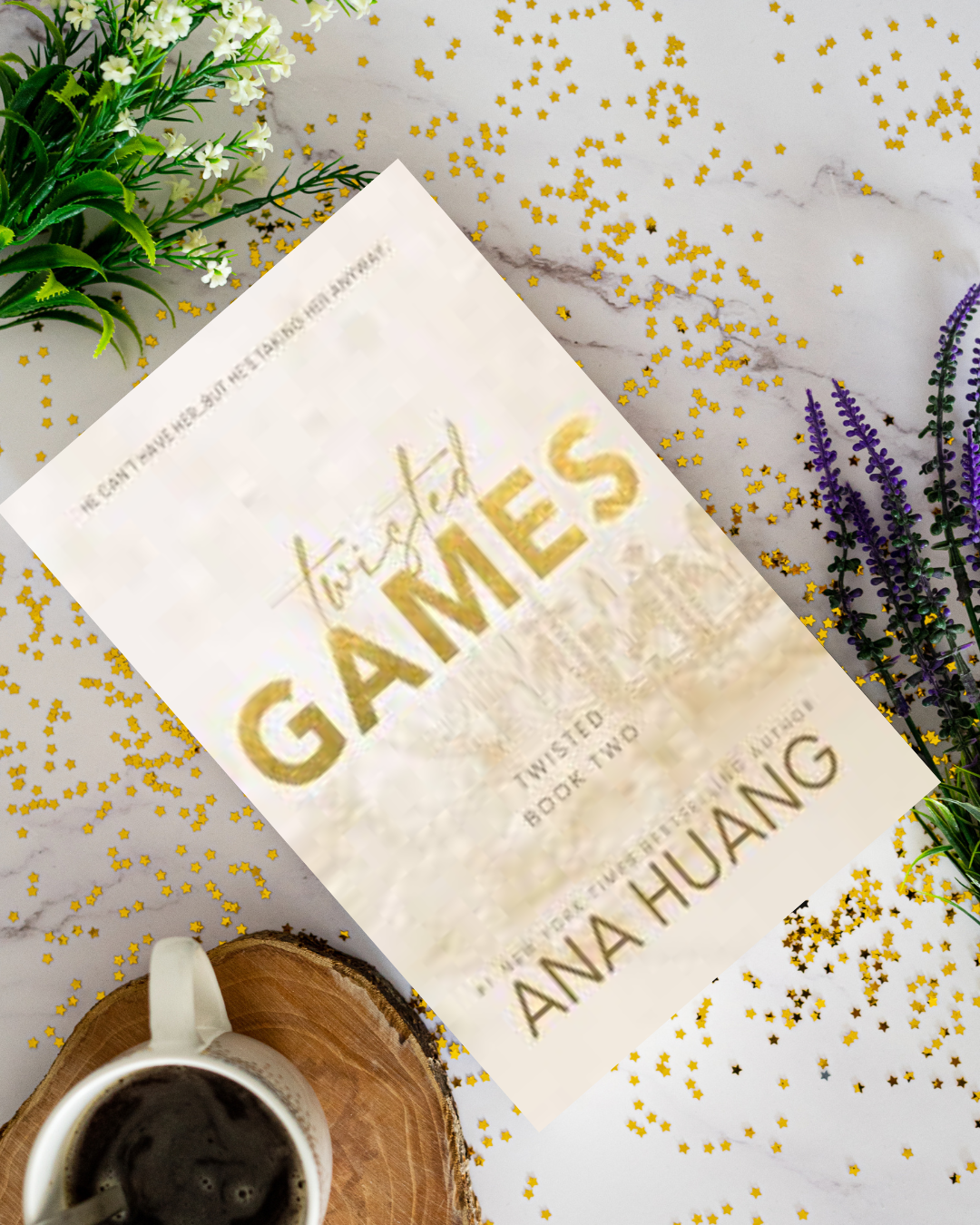
Twisted Games

Ana Huang’s Twisted Games is a modern romance that deftly intertwines passion, power, and emotional vulnerability within the glittering confines of royalty and the dangerous intensity of forbidden love. As the second installment in Huang’s immensely popular Twisted series, the novel stands out as a rich and deeply felt exploration of desire, duty, and the cost of falling for someone you can never have. What distinguishes Twisted Games from the many contemporary romances that populate today’s literary landscape is not merely its heat or glamour, but its emotional intelligence and the maturity of its characters. Huang crafts a narrative that balances the seductive fantasy of a royal romance with the raw authenticity of human emotion.

At its center is the slow-burning relationship between Princess Bridget von Ascheberg and her stoic, fiercely protective bodyguard, Rhys Larsen. The premise is familiar, evoking echoes of The Bodyguard and Roman Holiday, yet Huang breathes new life into the trope with precision and depth. Bridget is no helpless royal nor one-dimensional love interest; she is ambitious, intelligent, and increasingly restless within the rigid structure of royal life. Rhys, on the other hand, is a man defined by discipline and restraint, a soldier whose loyalty to his duty becomes the greatest obstacle to his heart. Their chemistry is palpable from their first interaction, but Huang wisely allows the romance to simmer rather than explode, building tension through stolen glances, sharp dialogue, and the unspoken language of longing.

The book’s pacing is one of its strengths. Huang takes her time developing Bridget and Rhys’s relationship, allowing readers to witness its evolution from antagonism to trust, from forbidden attraction to an all-consuming love. The gradual deepening of their emotional connection makes their eventual surrender not only satisfying but inevitable. This slow build gives weight to their passion, grounding it in genuine affection and respect rather than impulsive lust. When their relationship finally crosses the line, it feels earned, the culmination of hundreds of moments charged with unspoken desire.

Ana Huang’s prose is direct yet evocative. She writes with a cinematic sensibility, painting vivid scenes that draw readers into the opulent yet suffocating world of royalty. The royal palace, with its traditions, constraints, and endless scrutiny, becomes both a setting and a symbol. It represents the gilded cage in which Bridget must find her voice and her freedom. Against this backdrop, Rhys’s presence is both her protection and her rebellion. His very existence in her life defies the rules that govern her world. Huang uses this tension to explore themes of power, autonomy, and identity, transforming what could have been a simple romance into a meditation on self-determination.

Characterization lies at the heart of Huang’s storytelling. Bridget’s arc is one of empowerment. At the beginning of the novel, she is a woman torn between personal desire and public duty, constantly negotiating the expectations placed upon her by birth. As her story unfolds, she learns to assert herself not only as a lover but as a leader. Her journey from reluctant princess to confident ruler is deeply satisfying, particularly because it unfolds alongside her romantic evolution. Rhys, meanwhile, is a study in controlled intensity. Beneath his hardened exterior lies a man burdened by guilt, loyalty, and vulnerability. His stoicism is not a romantic ideal but a shield forged by past pain. The gradual unmasking of his emotions, his surrender to love, and his struggle to reconcile duty with desire make him one of Huang’s most compelling male leads.

The emotional core of Twisted Games is the balance between love and sacrifice. Bridget and Rhys’s relationship is fraught with obstacles, royal protocols, political expectations, and the omnipresent fear of scandal. Yet, instead of succumbing to melodrama, Huang infuses their struggles with sincerity. The lovers’ choices carry real consequences, and their love is tested not through contrived misunderstandings but through the genuine conflicts of their world. When Bridget must choose between the throne and the man she loves, the decision feels wrenching precisely because Huang has built their world with such care.

Huang’s command of emotional tone is noteworthy. She alternates between moments of lighthearted banter and scenes charged with aching intensity, maintaining a rhythm that keeps readers both engaged and invested. Her dialogue is sharp, often laced with humor, which prevents the narrative from collapsing under its own emotional weight. Yet when the story demands gravity, she delivers with poise. The confessions, the silences, the tender gestures, all resonate because they feel authentic. The sensual scenes, while undeniably steamy, are written with a sense of intimacy that deepens character rather than objectifies it. In Huang’s hands, desire becomes both a form of expression and a form of liberation.

Beyond its romance, Twisted Games is also a story about independence and resilience. Bridget’s journey toward sovereignty mirrors the modern woman’s struggle to claim her space in a world that often defines her through tradition and expectation. The royal setting amplifies this tension, but the themes remain universally relatable. Rhys, too, must confront his past and learn that love does not diminish strength but redefines it. In this sense, the novel is as much about self-discovery as it is about romance.

Stylistically, Huang balances accessibility with sophistication. Her prose avoids ornamentation yet carries emotional weight. She understands that modern romance readers crave not only passion but also psychological depth, and she delivers both with precision. The book’s emotional resonance is further heightened by its structure, alternating moments of tension and tenderness that mimic the natural rhythms of love and longing.

If there is one quality that defines Ana Huang’s work, it is her ability to make the reader feel. Twisted Games is not content with surface-level emotion; it reaches into the complexities of human connection. The novel’s most moving moments are not its grand declarations but its quiet ones: the look that lingers too long, the confession whispered in vulnerability, the unspoken acknowledgment that love, though forbidden, is worth the risk.

As a sequel, Twisted Games enriches the Twisted universe while standing firmly on its own. Readers unfamiliar with Twisted Love, the series’ first book, can easily enter this world without confusion, yet those who have followed from the beginning will appreciate the thematic continuity. Huang’s ability to expand her fictional universe while giving each story its unique emotional texture speaks to her growth as a storyteller.

Ultimately, Twisted Games is more than a romance. It is a story about courage, integrity, and the price of freedom. Ana Huang captures the intoxicating allure of forbidden love while grounding it in emotional realism. Bridget and Rhys’s story reminds us that love is not merely a feeling but a choice, one that demands vulnerability, strength, and sacrifice. The novel’s conclusion, both satisfying and bittersweet, reaffirms Huang’s belief that love, when genuine, transforms rather than consumes.

With Twisted Games, Ana Huang proves once again that contemporary romance can be both passionate and profound. Her characters breathe, bleed, and grow on the page, and her storytelling bridges fantasy and authenticity with remarkable grace. In the end, what lingers is not just the memory of a royal romance, but the quiet conviction that to love deeply, even when the world forbids it, is one of the bravest acts of all.

7 2

Trending Posts

Planet's Best Book Reviews

Sign up now and join the community of best book reviewers.
Advertisement Inquiry - info@ehardback.com

Sign Up