

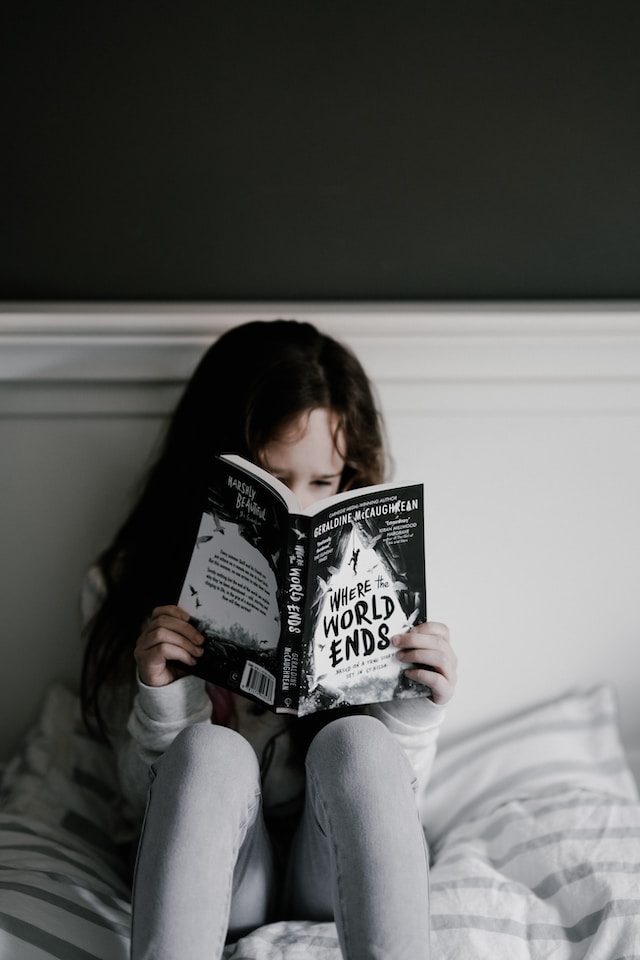
Where the World Ends by Geraldine McCaughrean is historical young adult fiction inspired by a real event from 1727, when nine boys and three men from St Kilda were left on a remote sea stack to harvest seabirds. They expect to return home after a few weeks. Instead, the boat never comes back, and the group spends months trapped on the rock, facing hunger, storms, injury and the increasingly frightening possibility that everyone they know has disappeared.
The setting is the novel's first great achievement. McCaughrean makes St Kilda feel like a community shaped by necessity, where seabirds are not picturesque wildlife but food, oil, feathers and survival. The boys' knowledge of climbing, hunting and preserving what they catch feels embedded in their lives rather than added as historical decoration. Readers who enjoy historical fiction have particularly praised this immersive quality, while some younger readers have found the amount of day to day survival detail slower than expected.
More important is what the novel understands about fear. Quill, the central character, is not simply brave because the plot requires a brave boy. He is frightened, homesick and increasingly aware that the adults around him may be losing control. His storytelling becomes a way of managing fear, while Col Cane's increasingly extreme religious explanations offer another kind of psychological shelter. The contrast is beautifully observed: when people cannot explain what is happening, they create stories that make the uncertainty bearable.
This is also where the book handles faith with more care than it initially appears to. The novel distinguishes genuine belief from religious authority used as a means of control. That distinction gives the story a psychological dimension beyond simple survival. Some readers have found the religious extremism disturbing but meaningful, while others have felt that certain character reactions are difficult to understand. The book is strongest when it allows fear, faith and imagination to overlap rather than reducing them to neat categories.
The main disappointment is pacing. The prolonged focus on repetitive labour and survival can make the middle feel deliberately slow, even though that monotony is part of the ordeal. A more impatient reader may wonder why the story is taking so long to reach its next crisis. I found that slowness defensible, but not always dramatically satisfying.
Content warnings include child death, animal death and cruelty, starvation, injury, gore, violence, abandonment, bullying, grief, suicidal thoughts, a suicide attempt, sexual harassment, an adult and minor relationship, sexism and sexual assault.
Where the World Ends is ultimately less interested in heroic survival than in what isolation does to the mind. Its most memorable insight is that when people are frightened enough, stories become survival tools too. McCaughrean gives that idea a harsh, compassionate form, and the result is historical fiction that feels both physically grounded and psychologically alive.