

Satire ages badly when it is satisfied with being right instead of being perceptive.
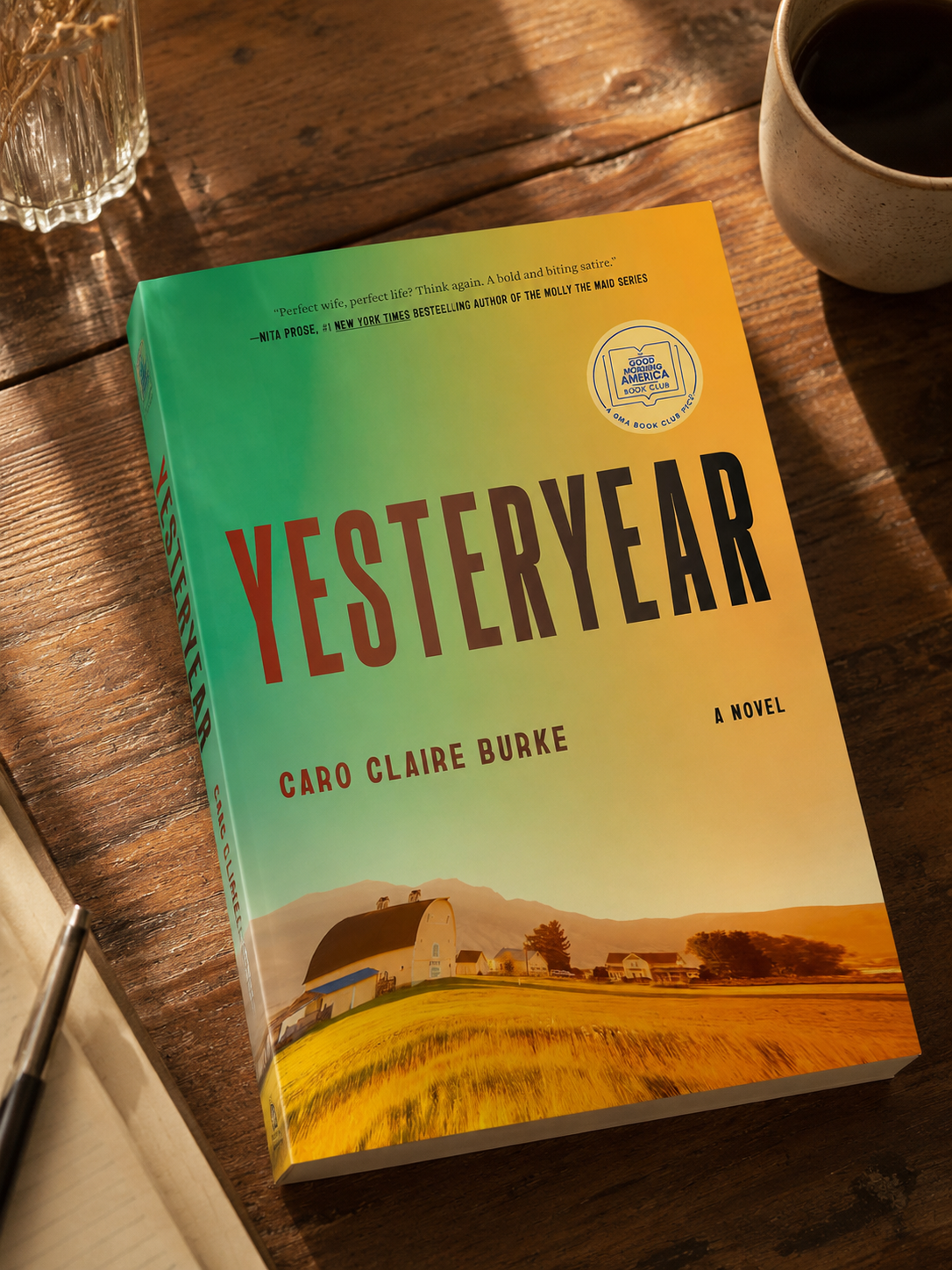
Caro Claire Burke's Yesteryear arrives wearing the clothes of speculative fiction but speaks with the sharp tongue of social satire. Its premise is irresistible: a celebrated "tradwife" influencer, whose carefully curated life of domestic perfection masks a far messier reality, wakes to find herself living in an unforgiving version of the nineteenth century she has spent years romanticising online. Critics have praised Burke's debut for its ingenious concept, brisk pacing and biting social commentary, often describing her prose as polished, accessible and acerbic. Others have argued that the novel's psychological depth never quite matches the brilliance of its premise, leaving some of its larger ideas underexplored.
Burke writes with enviable confidence. Her sentences move quickly, sharpened by irony rather than ornament. The rhythm is clipped and deliberate, propelling the reader forward with the certainty of a writer who knows exactly where the joke lands. Her register is unmistakably contemporary, steeped in the language of performance, branding and internet celebrity without becoming unreadable to those fortunate enough to have escaped those ecosystems. The prose has bite, and it knows where to sink its teeth.
Yet confidence can become complacency. Burke occasionally mistakes satire for observation, underlining hypocrisies that are already perfectly visible. Her sharpest insights are sometimes followed by another sentence explaining them, as though she distrusts the reader's intelligence. The result is that the novel occasionally lectures when it ought to linger. Characters surrounding Natalie often function more as arguments than people, and the prose inherits that tendency, sacrificing complexity for precision.
Then comes one glorious stretch where Burke stops proving her point and simply allows the absurdity of history to collide with modern vanity. It is genuinely exhilarating. The satire ceases to wink at itself and begins to reveal something sadder and more enduring about the fantasies people build around the past.
I found the book on a bright morning while sitting beside my kitchen window, the warmth of a finished cup of coffee still lingering as sunlight settled across the room. It felt like one of those accidental encounters readers secretly hope for, the sort that quietly rearranges your thinking. Long after the final page, Yesteryear remained with me, less because of its clever premise than because its best passages refused to loosen their grip.
Burke may not always trust silence, but when she does, her prose discovers a depth that the novel's satire alone could never reach.